Sunday, December 18, 2011

The Naive and the Sentimental Novelist - Orhan Pamuk

I have to confess - I hadn't actually read any of Pamuk's books before I began reading this one. I started reading The White Castle once (a gift from a friend), but gave up half way because it was so damn boring and I couldn't understand a thing. 

This book was actually born as a series of lectures that Pamuk gave. I suppose it's because of that that the tone is lightly conversational. He quotes extensively from his favourite books and authors, and also from his own books. 

The novel is divided into six chapters, each representing one of the six lectures that he gave as part of the series. Of these, the last four chapters may be seen by aspiring novelists as advice of some sort. 

The third chapter is on character, plot and time. Contrary to received wisdom, Pamuk says that the author should not allow characters to dictate where the novel goes. In fact, he says, characters are just products of the narrative. They are formed by the landscape, by the plot, by the things that happen to them. The novelist must try to get into the shoes of each of her characters, and see the world through the character's eyes.

He also says that a plot is just a sequences of points, of "nerve endings", of critical moments in the novel. Similarly time may either be objective or subjective. The novelist may choose to let the readers have an objective view of time, by setting the actions against real life events that we know happened. Or, the timeline may be seen through the subjective eyes of the protagonists - and their perception may not be accurate.

The fourth chapter is on words, pictures and objects. Pamuk used to be a painter. He enjoyed painting - it was something that came naturally to him. But at the age of twenty-three, he decided to give up painting and become a writer instead. Perhaps this former association is the reason he repeatedly uses the metaphor of painting throughout the book.

He differentiates between visual writers and verbal writers. Visual writers are the ones who are able to form pictures through their words. They convey strong images to the reader. The reader visualizes the story as a series of images. Whereas verbal writers are the ones who appeal to the reader through narratives, through facts rather than images.

Pamuk claims that all writers are jealous of painters. Painters, you see, have the ability to step back from their painting at any time and view it from a fresh perspective. Writers don't have that luxury. Not unless they stop writing and start re-reading their book from the beginning. Writers must struggle on, lost amongst the words that form the endless forest of their novels.

His obsession with museums finds a mention in the fifth chapter. Novels, he says, are like museums. While museums are dedicated to preserving objects, novels help us preserve our everyday life, our conversations, our likes and dislikes, our society, our culture.

The sixth chapter deals with the 'center' of the novel. "The center of the novel," he says, "is a profound opinion or insight about life, a deeply embedded point of mystery, whether real or imagined." Each novel has a center, and the reader reads the novel in an attempt to find this center. The writer may know the center before starting the novel, or the center may be found during the course of writing the novel.

In relation to this, he states an interesting theory about why we read novels. Even the most secular of us reads novels in order to find the meaning of life (and by novels he is talking about literary novels, of course). In our real life, we are unable to find meaning, a center. But by finding the center of novels, we are able to feel a sense of achievement, as if we have found the meaning of life!
• • •

Thursday, December 15, 2011

The Blind Assassin - Margaret Atwood

The Blind Assassin kept me absorbed for almost two weeks. I kept itching to read it while I was in office. I stopped reading newspapers so I could spend every possible second on it.

And yet, once I had finished it, I couldn't bring myself to write about it. Why? Because there was too much to write. This book is too big for my puny self to write about.

And yet, here I am, doing exactly what I thought I wouldn't. I'm making myself do it precisely because it's the kind of book I'd like to write someday. Someday, when I've lived long enough to think I know enough to write - yes, that day.

The only book of Atwood's that I had read before was The Edible Woman, her first published novel. And if you've read it before you read her other works, you'll know it's a good book. Just that, compared to this one, it seems a little unfinished, a bit unpolished. Compared to TBA, which showcases the skills of a great writer at the height of her powers, TEW read more like the tentative first steps of a toddler.

The Blind Assassin, despite its length (over five hundred pages of close printing), is an almost unputdownable book. It can be described as being about many things - the relationship between two sisters, an illicit love, the first half of the twentieth century. But most of all, I think, it's about time. Time, and nostalgia.

The book is written, ostensibly, by Iris Chase Griffen, the elder of the two daughters of Captain Chase, head of Chase Industries. Iris is writing out her memoirs in her old age, knowing that she is close to death. She takes almost a year to do it, and each chapter begins with her reflections on old age and what she did that day, before she plunges back again into her narrative.

The great defining moment of Iris's life seems to have been the publication of a posthumous book written by her sister, Laura. Laura commits suicide shortly after writing the book, and Iris gets it published. The book overcomes its initial obscurity to become highly controversial and acclaimed, and Iris seems to have lived the rest of her life in the shadow of her sister's fame.

Iris lists out the initial glory years of her life, the luxury of being one of the children of a rich industrialist. The two sisters lived a sheltered life in a small Canadian town dominated by the Chase factories. There were misfortunes, of course - the early death of their mother, their father's war-born psychological problems and addictions, the lack of friends apart from each other. But they survive.

And then, the Depression, the loss of their money, her forced marriage at the age of eighteen to another industrialist, Richard Griffen. The ill-treatment she receives at the hands of her husband and his sister, the growing estrangement of Laura. Laura's death and later, Richard's.

Interwoven through this narrative is another one - Laura's novel. The controversy about the novel arises from its frank depiction of pre-marital sex, at a time when Canadian society was not ready for it. Though written as a novel, it is obviously autobiographical, and details the female protagonist's encounters with an unnamed male.

And from Iris's narrative, it is obvious who the male is - Alex Thomas, a communist, who comes into contact with the two sisters through one of their father's girlfriends. They meet him again after Iris marries Richard and they both shift to Toronto. Both the sisters develop an obsession with him.

The novel is powerful because of its rich detailing. Atwood builds up her narrative, block by block, word by word, layer by layer. Throughout the novel, the reader feels like there is something missing, something that is just beyond the surface. Gradually, this feeling becomes a certainty, and the turning of each page is a quest to attain this missing piece. And Atwood plays along - she keeps up the tempo, lays red herrings to confuse one.

The last few pages are both pleasurable and horrifying. Pleasurable because the truth is finally laid bare, and horrifying because the truth is what one has suspected all along.

As always with a book this good, I wanted to re-read it immediately after I finished reading the last page. To re-evaluate each incident in light of the whole story. Or, to use Orhan's Pamuk's metaphor, to re-consider each tree in the light of the whole forest.
• • •

Saturday, December 10, 2011

The Wandering Falcon - Jamil Ahmad

Off late, I seem to mostly pick up books with a feminist tone. Or maybe it's just that I'm finding feminist overtones in whichever book I read.

The latest is 'The Wandering Falcon'. Many reviews have described it as a novel, but it's not. It's a collection of stories, tied together by a common character named Tor Baz or Black Falcon. In most of the stories, Tor Baz is a character on the sidelines. But the stories help us track his life, from his birth to his adulthood.

The book takes us to the harsh mountains on the Pakistan-Afghanistan border. This is the land of the tribes. Where honour is more important than anything else. Where women are bought and sold by men - whether in marriage or otherwise. Where daily life is a rough struggle against the elements. Where less than half of a woman's children survive to adulthood.

The most important part of the stories we usually read is the plot. But somehow, in this collection, the stories are not as important as the background they play out on. And not because the plots are not engrossing, mind you. A woman and her lover stoned for eloping, nomad tribes getting caught between two countries, women being sold into slavery - these are some of the subjects of the stories. 

But one gets the feeling that the author is just using these plots to tell us about the area - the culture and way of life of the tribes, the harshness of the terrain, the sufferings of the women there. Reading this book, it is easier to understand why the region is so unstable - each man's loyalty is to his tribe, and it takes very little to set the tribes off against each other.

Though finally published this year, these stories were actually written almost forty years ago, during Jamil Ahmad's career as a civil servant. But he has somehow managed to rise above the cold officialdom of his daily life to write stories that sensitively portray the struggles of the mountain people. His writing is both evocative and simple - poignant without romanticizing. No wonder the novel has won the Shakti Bhatt First Book Prize this year.
• • •

Wednesday, December 07, 2011

Kemmanagundi Trip - Hebbe Falls

Hebbe Falls was one of the most important items in our Kemmanagundi itinerary. But somehow, mostly due to bad planning and physical unfitness, it was quite late in the day by the time we got there.

Hebbe Falls is about fifteen kilometers from Z-Point. But most of the road is not motorable. I'm not sure why - the road could be fixed in no time if the authorities would put their minds to it. Perhaps they want to provide employment to the jeep drivers who are available on rent there to drive you down. Another possible reason is that it would make more tourists venture there and spoil the beauty of the place. As it is, only the adventurous types will try to get to Hebbe Falls. I definitely can't imagine fat aunties in heavy saris enjoying the beauty of Hebbe!

The jeep ride to the falls is one to remember. Jolting over a rough red road of rocks. Feeling quite certain at least a couple of times that the jeep is going to topple over. Hoping like Hell that no vehicle comes from the other side, because the road is too narrow for two. Laughing aloud at the contrast between our faces and the poker face of the driver. Marveling at the fact that the driver does this every day and every hour!

We jolt down the red hill side, and then pass through the comparatively better road of a coffee plantation. The driver finally deposits us at a place and says that he can go no further, as it's private property further on. We will have to trek a further fifteen minutes through the jungle to get to the falls. He promises to come back in an hour to pick us up.

So we haul out our bags and start walking. It's already a quarter past five, and we're very aware that we will have to hurry up - or we'll get very little time at the falls.

The path is wide and plain initially - an easy walk. Soon, we leave behind the coffee plantation and enter the forest - in front of us is the river. We have to cross the river twice, we have already been warned. There's a pack of five girls in front of us, and they take off their chappals and walk across with lots of squeals and shouting. Stupid people that we are, we have chosen to wear shoes, so we spend a couple of minutes taking off our shoes.

The problem with the river is not the cold water or the depth (it's quite shallow). It's the slippery stones we have to walk over. At least a couple of times, we slip and almost fall. But we make it across finally. We cross the river twice more before we get to the falls. The path has become a proper jungle footpath by now. In places, it's difficult to find it.

The first glimpse of Hebbe is awe-inspiring. You glimpse it through the leaves - a giant of black rock and white surf. Its beauty lies, perhaps, in its brute force - here is nature in all her glory, and she can kill you if you take a step out of line.

Hebbe invades all senses - the sound echoes inside the jungle and mutes all else; the spray hits you many meters away. Your mind is invaded by a strange kind of ecstasy, and you walk, zombie-like, closer to the walls.

Inevitably, the rocks are slippery here as well. We clamber over them and get as close as we can to the fall. The rocks form a kind of wall in front of the falls, creating a large pool there. We stand in this pool. The water reaches our thighs, and the floor is sandy.

Thankfully, there are very few other people. The girl gang leaves after a short while, and is replaced by a group of two young couples. They don't enter the water, and we have the water all to ourselves. We play around, splashing water on each other and whooping with the sheer ecstasy of being alive. The cold water washes away the exhaustion of the day, and we are happy just to be there, to be experiencing this spell-binding place. The outside world is far away - we know only the falls, and the rocks, and the river, and the surrounding forest.

I go and sit on one of the rocks forming the rock wall, to look up at Hebbe and marvel at its might. It's nice to sit there, to NOT note the darkening sky, the forest coming alive at dusk, the spray changing colour to gray. After a while, I go back to the gang, and suddenly there's a shout.

"SNAKE! SNAKE!"

I look around and see a long rope of orange wriggling crazily. It's right next to where I was sitting!

With a lot of shouting and screaming, we're out of the water in five seconds, slippery rocks or not. I don't even look back at the snake to see where it is. (We tried later on to identify the snake through Google Search, but we couldn't even agree on the colour - I said orange, while others said yellow, and yet others said light brown.)

It turns out that the snake arrived at the right time. We suddenly realize that it's almost dark, and that we have a fifteen minute walk through the jungle ahead of us!

Then begins a frantic half-run through the jungle, barefoot. It isn't so much the jungle we're worried about as much as the river - the three river crossings are going to be quite dangerous in the dark. We won't be able to see the stones, and who knows if even bigger snakes are lurking in the dark water?

Thankfully, we make it across in one piece. The final crossing is the worst - the river is quite wide at this point, and the stones quite slippery. It's almost fully dark. I get across first, and shine my phone's torch on the water for the others. But it's almost no use, since the water just reflects the light. Two of us slip and almost fall, thankfully with no worse result than wet shoes.

And so ends our Hebbe adventure. The jeep is waiting for us, and we rattle our way up the hillside again. The driver drops us to the spot where we have parked our Xylo, collects his money (Rs 800 for the round trip - which seemed way too high before the trip, but not after we experienced the teeth-rattling ride), and goes off.

The place is extraordinary in the dark. It's an open area, surrounded by hills. Almost no light all around, except for the stars up above. No sound apart from those of the jungle. We change into dry clothes - the guys under the stars, and the girls inside the vehicle. And then we start on the three-hour drive back to Kemmanagundi.

Hebbe Falls was certainly the best part of the Kemmanagundi trip. Hopefully, I'll get another chance to go there.
• • •

Tuesday, December 06, 2011

Stardust - Neil Gaiman

When I started reading 'Stardust', I suddenly realized that I had watched the beginning of a movie based on the novel. At the time, I had switched channels because it seemed like a kids' movie. And I felt the same about the book, too. (Well, if you discount the love-making in the second chapter.)

Stardust is the story of Tristan Thorn, from the village of Wall, who goes in search of a fallen star. Victoria, the prettiest girl in the village, has agreed to marry him if he gets her the star.

The village of Wall is a special place - you see, it's right on the border between our world and Faerie, the land of magic. The star has fallen into Faerie, and it's into this magical and dangerous place that Tristan must venture if he is to get Victoria the fallen star.

Fortunately, he finds the star without too much trouble, thanks to a little gnome who owes his father a debt. He discovers that the fallen star is actually a young girl-woman, and a pretty obnoxious one at that. Getting her back to Victoria will be a tough task, especially because she has broken her leg during the fall.

To complicate matters, there are many others who are after the fallen star. There are two princes, who must retrieve from the star a stone that she has in her keeping, to claim their right to the throne of their kingdom. There is a wicked old witch, who needs the star's heart to regain her lost youth.

The novel follows Tristan and the star, and relates their many adventures as they try to find their way back to Wall. It's a quick single-sitting read for those who have time. It took me two weeknights, and that's saying something, considering my current deplorable reading speed. 
• • •

Monday, November 14, 2011

The Fifth Child - Doris Lessing

The Fifth Child is a quick one-sitting read from the Nobel prize winner, Doris Lessing. It tells the story of David and Harriet Lovatt, who decide that the path to happiness lies in having many clever and talented children, all growing up together in a large and happy house. Their dream goes well till their fifth child, Ben, is born. It's clear from the beginning that he isn't quite human. He lacks human emotion, the other children hate him, he evokes a chill of horror in anybody who meets him.

Unputdownable is quite an apt word for this small book. It's difficult to know how to classify it, because the story doesn't quite fit into the genre of horror. It takes the reader to the edge and shows her the horrors that lie beneath, but stops short of actually terrifying her.

There is a sequel as well - Ben, in the World. The Fifth Child ends with Ben about to leave home and out into the world. The sequel seems to be about how he fares there.
• • •

Friday, November 11, 2011

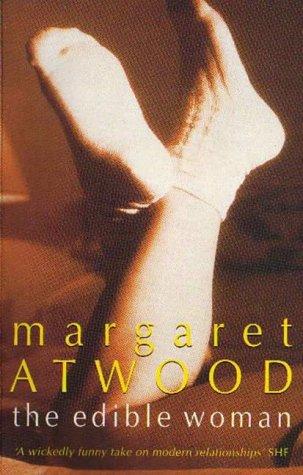
The Edible Woman - Margaret Atwood

The Edible Woman is, strangely enough, the first time I'm reading Margaret Atwood. And I suppose it's an apt introduction, considering that this was the first novel she ever published.

She wrote this book when she was around the age I am right now. Despite the evidence of feminist thought in the book, she mentions in the introduction that she wrote it in the era before feminism. And her thoughts resonate well with me, in my current stage of life.

The Edible Woman is the story of Marian. Marian has just graduated from college, and is working in a company that conducts market surveys. She was dating an upcoming lawyer named Peter on the understanding that neither of them wants to get married right now. But out of the blue, Peter asks her to marry him, and she accepts. The rest of the story is about how she tries to adjust and change herself to suit Peter.

The book is in three parts. In Parts one and three, Marian writes in the first person. She has a strong voice, she knows what she wants and why she wants it. Part two is the longer part, where Marian is referred to in third person, and she goes about an increasingly strange set of situations, zombie-like. She literally runs away from Peter one night, she meets a self-centered person named Duncan and lets herself be pulled into his self-centered world, she tries to self-destruct in the strangest possible ways. Her body stops accepting food - first non-vegetarian food, and then everything.

Through it all, the reader is rooting for her. Peter isn't portrayed as a bad person. He just wants to be successful, and Marian, who is smart and presentable, will be an effective asset in his career. There was one image that particularly struck me. Peter and Marian are in bed, and Marian is lying on her tummy. Peter has placed his ashtray on Marian's back. He is smoking a post-coital cigarette and drinking a post-coital glass of alcohol. The normal Marian would have been humiliated by this use of her body as a table, but the new Marian says nothing. She gets up and makes Peter a drink when he asks for one. He removes the ashtray so that she can do that, and replaces it on her back when she lies down again.

Of course, there's the obvious question - isn't it natural to need to change yourself when you experience such a huge and important event in your life? Surely, Peter would have had to adjust as well? True. But we see Marian quitting her job, we see her body protesting her decisions, we see her entering into self-destructive friendships. It's clear that this marriage is not something she wants. This is something that she's doing because of society's expectations. And other women are jealous of her for having found such a catch so early on in life.

The book ends with another striking image.

[Begin Spoiler Alert]
Marian finally realizes what is happening to her. She bakes a sponge cake in the image of a woman, and she offers it to Peter. Peter gets the message,  and leaves. But in the final twist, the cake is finally finished by a person who is probably even worse for her than Peter.
[End Spoiler Alert]

Having liked my first taste of Atwood, I've now resolved to read more of her. Next up is her Booker prize-winning novel, The Blind Assassin. 
• • •